Film Base Camp Rental: What It Includes and How to Plan One
This guide explains what a film base camp rental actually includes, from trailers and power to sanitation and shelter, and shows productions how to size and budget it correctly for any crew size or location.
When someone on your production says "we need to sort base camp," they're really asking three things at once: what equipment do we need to keep cast and crew fed, sheltered, and functioning, how much space will that require on location, and what will it cost against a schedule that's probably already tight. A film base camp rental isn't a single item you check off a list. It's a bundle of trailers, power, sanitation, and shelter that scales up or down based on crew size, shoot length, and how remote your location is. Getting the scope wrong in either direction, too small or unnecessarily large, tends to show up later as either a cramped, unhappy set or a bloated line item nobody can explain in the wrap report. This guide walks through what actually falls under "base camp," how crews size and budget for it, and where productions commonly lose time or money in the process.
What Counts as Base Camp on a Film Set
Base camp is the off-set staging area where cast and crew eat, change, rest, and get ready between takes. It's distinct from the set itself, which is wherever the camera is actually rolling, and from the production office, which handles the administrative side of the shoot. Base camp is the physical infrastructure that supports the people working the set, usually parked or pitched a short distance away, sometimes just around the corner and sometimes a shuttle ride away depending on the location.
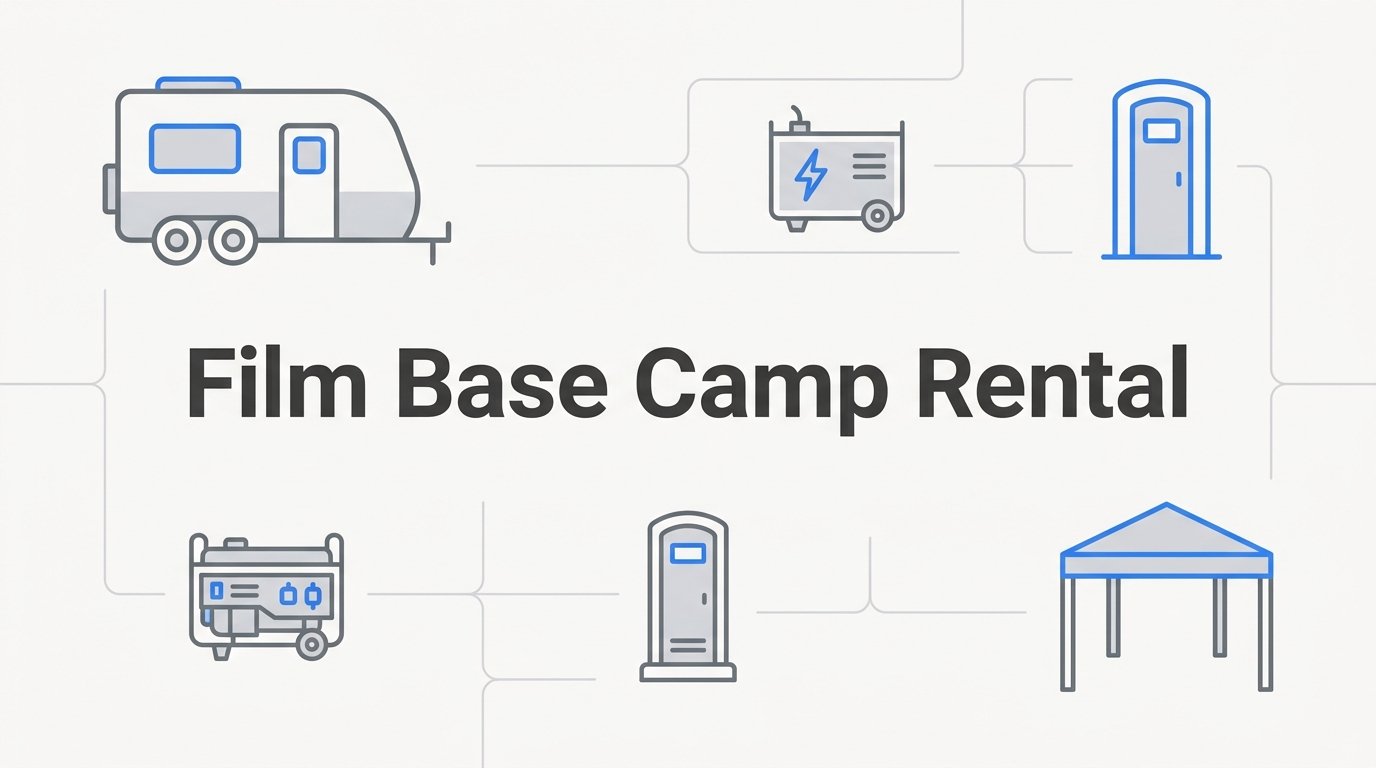
A honeywagon is often the anchor of any base camp setup. It's a multi-room trailer combining restrooms, and sometimes small dressing rooms, into one unit, and it's typically one of the first items booked because almost every shoot needs one regardless of size. From there, the rental list expands based on who's on set and how long you're there:
- Cast trailers: private trailers for principal talent, ranging from single-room units to larger star wagons with multiple compartments.
- Hair and makeup trailers: equipped with styling chairs, mirrors, and lighting for the glam team.
- Crew tents or tenting: shade and shelter for background talent, crew breaks, and equipment staging.
- Generator and power distribution: the electrical backbone that runs everything else in the camp, from HVAC in trailers to lighting.
- Portable restrooms: additional stalls beyond what the honeywagon provides, scaled to crew size.
- Catering and craft service tents: shelter and setup space for meals and snacks throughout the day.
Not every shoot needs every item on that list. A one-day commercial with a five-person crew might get by with a honeywagon and a pop-up tent. A three-week feature with a full cast and a hundred-plus crew members will need most of it, plus enough generator capacity to keep it all running. The planning question isn't "what's included in a base camp rental" so much as "which of these categories does this specific shoot actually require."
Who Needs a Base Camp Rental (and Who Doesn't)
Scale is the first decision point, and it's worth being honest about it before you start calling vendors. A small crew, generally under fifteen to twenty people, shooting for a single day in a location with reasonably close access to real bathrooms and shade, often doesn't need a full base camp setup. A honeywagon and a shade tent for craft service might cover it entirely, and renting more than that just adds cost and clutter to a simple day.
Larger productions have different math. Multi-day shoots, name talent who need private space between setups, or remote locations with no existing infrastructure all push toward a fuller camp: cast trailers, generator power, climate control, and enough restroom capacity to handle a full crew without long lines between takes. Weather is part of this too. A shoot in July in Arizona or in a snowy exterior location needs climate-controlled trailers regardless of crew size, because you can't ask talent or crew to sit in a hot box between takes.
One misconception worth clearing up: base camp rentals aren't only for big-budget features with studio backing. Commercials shooting on location, indie features with modest budgets, and branded content shoots all commonly need scaled-down versions of the same infrastructure. A two-day commercial shoot with a client on set, a few principal talent, and a crew of thirty is a real base camp job, just a smaller one than a studio feature. The scope changes, but the underlying planning questions, how many people need restrooms, shade, and a place to change, stay the same regardless of budget tier.
The flip side misconception is assuming any trailer rental company can handle the full logistics of a base camp, including generator sizing, layout planning, and permit coordination. Some vendors specialize narrowly in one equipment category. If you need a coordinated setup across multiple categories, it's worth confirming upfront that a provider can deliver and support the whole package, not just drop off a trailer and leave.
How Base Camp Size and Cost Are Calculated
Base camp equipment is typically priced per unit, per day or per week, with additional charges for delivery, setup, and strike (the teardown and removal at the end of the shoot). A generator, a honeywagon, and a restroom trailer are each billed separately, and weekly rates are usually more economical than daily rates if your shoot runs multiple consecutive days. Exact rates vary by region, market demand, and season, so treat any number you hear from a colleague as a rough reference point and confirm current pricing directly with vendors as of 2026 rather than budgeting off memory.
Crew size and cast count are the two numbers that drive almost every other decision. More people means more restroom stalls, more seating in catering tents, and potentially more trailers if you have multiple principal cast members who each need private space. A rough industry habit is to plan restroom capacity based on total headcount on the busiest shoot day, not the average day, since undersizing here creates bottlenecks fast. Cast trailers scale with how many principal actors are contracted and whether any of them have trailer requirements written into their deal.
Location is the other major cost driver, and it works in both directions. A remote location with no power hookup or water access needs a generator sized to run the entire camp plus water tanks or holding tanks for the restroom units, which adds equipment and delivery cost. An urban location, by contrast, might have access to street power or existing facilities, but it often comes with tighter footprint constraints, permit requirements, and higher costs for parking or street closures. A location scout's notes on power access, water, and available parking should feed directly into your base camp budget conversation, not come as a surprise once trucks are en route.
Planning the Layout: Power, Parking, and Permits
Once you know what equipment you need, the physical layout becomes the next planning problem, and power is usually the first constraint to solve. Every trailer, light, and HVAC unit draws load, and generators are rated in kilowatts with a practical ceiling on how much they can run continuously without tripping or overheating. A production sizing its own generator needs to add up the draw of every trailer's air conditioning, the catering tent's equipment, and any additional lighting or charging stations, then build in a safety margin rather than running at the generator's rated maximum. Undersizing here doesn't just risk a tripped breaker, it risks losing power to a cast trailer mid-shoot day.
Parking and turnaround space is the second constraint, and it's easy to underestimate on paper. Trailers need not just a parking spot but enough clearance to maneuver in and out, particularly star wagons and multi-room honeywagons that are considerably longer than a standard vehicle. In tight urban locations or narrow rural roads, this can eliminate options that looked fine on a map. A site visit, or at minimum detailed photos and measurements from a location scout, should confirm that delivery trucks can actually get equipment in and out before you commit to a spot.
Permits are the piece most likely to catch a production off guard. Placing base camp equipment on public streets, municipal lots, or certain private properties often requires a permit from the local film office or city permitting department, and requirements vary significantly by city and county. Some jurisdictions require advance notice measured in weeks, not days, particularly if base camp placement affects street parking or traffic flow. Because these rules differ by location, confirm specific requirements with the local film office well before you lock a shoot date, and build permit lead time into your prep schedule rather than treating it as a last-minute formality.
Mistakes That Delay or Inflate Base Camp Costs
The most common budget-buster is underestimating crew growth between prep and shoot day. A production books base camp equipment based on an early crew list, then adds background talent, extra grips, or a second unit as the schedule firms up, and suddenly the honeywagon and restroom count booked weeks earlier is undersized. Upgrading trailers or adding restroom stalls close to the shoot date is possible, but it's rarely as smooth or as affordably priced as booking the right size from the start. Building a small buffer into your initial headcount estimate, rather than booking to the exact number on day one of prep, avoids most of this.
Timing is the second recurring problem. Base camp equipment, especially cast trailers and generators, gets booked up fast during busy production seasons in major markets, and waiting until a week or two before the shoot can mean settling for whatever's left rather than what actually fits your needs. Locking in rentals as soon as your shoot dates and rough crew size are confirmed, even before every detail is finalized, protects your access to the right equipment.
The third mistake is skipping a site survey and assuming the location will accommodate whatever gets booked. Power access, ground stability for trailer leveling, water hookups, and truck access are all things a phone call or a set of photos can miss. A production that books a generator and cast trailers without confirming the site can handle them sometimes discovers, on the morning of the shoot, that the ground is too soft for a trailer to level properly or that there's no clear path for a delivery truck. A site survey, even a brief one, catches these issues while there's still time to adjust the plan instead of scrambling on shoot day.
Questions to Ask a Base Camp Rental Provider
A useful vendor conversation goes well beyond confirming a day rate. A few questions tend to surface the details that matter most once equipment is actually on location:
- What are the delivery and strike windows, and is setup crew included in the quote? Some rentals are drop-off only, leaving your crew to position and level trailers; others include a setup team as part of the price.
- What's the generator's run-time and fuel responsibility? Confirm whether the vendor handles refueling during a multi-day shoot or whether that falls to your production, and ask about noise output if you're shooting near residential areas or need quiet on set.
- What insurance coverage applies to the equipment, and who's responsible for repairs if something fails mid-shoot? A generator or trailer breakdown on day three of a five-day shoot needs a fast response, and it's worth knowing before you sign whether that's a same-day service call or a longer wait.
- How is pricing structured for extensions? Shoots run long more often than they run short, and knowing the day-rate or partial-week rate for an extra day avoids surprises if your schedule slips.
Getting clear answers to these questions before booking does more to prevent shoot-day headaches than any amount of equipment spec sheets. A base camp setup is only as reliable as the support behind it.
Locking In the Right Setup Before You Lock the Schedule
Matching base camp scale to your actual crew size and location realities, and doing it early in prep, is what separates a smooth shoot day from a last-minute scramble over trailers, generators, or permits. The earlier you can confirm rough headcount, location power access, and permit requirements, the more accurately a vendor can quote what you actually need instead of a generic package. Before you lock your shoot schedule, request a site-specific quote that accounts for your crew size, cast requirements, and location conditions rather than working from a standard package.
Contact us today to check availability and secure the professional film equipment you need to bring your production vision to life, without the overhead of ownership.
Serving New England Productions
Star wagons, honeywagons, crew trailers & more — delivered anywhere in Massachusetts and New England.
Request a Quote